 Stage Talk with Rick Koster
Where every show has something to say.
WHICH ONE’S RYAN?
If you’re a Pink Floyd fan — and only 317 people in the world aren’t — you probably understand the jokey allusion contained in the title of this interview.
Y’see, for years, insiders have relied on the comical phrase “Which one’s Pink?” when talking about or bringing up the seminal and frontiers-stalking British band Pink Floyd. Their distinctive and visionary music, a fusion of space rock, prog and experimental music with culturally and socially acute commentary, is not subject to time or demographics.
So, some goofball decades ago, thinking Pink Floyd was a Crosby, Stills & Nashy group named collectively after its members, wondered … “Which one’s Pink?”
The funny part is that Pink Floyd — bassist/vocalist Roger Waters, drummer Nick Mason, keyboardist Rick Wright and guitarist/vocalist Syd Barrett until he left and was replaced by guitarist/vocalist David Gilmour — is actually named after two obscure American bluesmen, Pink Anderson and Floyd Council.
Somewhere along the way, asking “Which one’s Pink?” became the sort of thing you’d find engraved on a coin or bill if Pink Floyd was … well, “Money.”
The comedy just won’t stop!
ANYWAY, “Ryan” refers to guitarist/vocalist Ryan Ball of one of earth’s premiere Pink Floyd tribute acts, The Machine. The band performs at 7 p.m. Friday at the Garde — and their ability to replicate the sounds of PF are so spot-on it’s frankly eerie.
More than that, The Machine doesn’t just deliver hits and material from favorite albums. Being fans themselves, and capable of pulling off the most distinctive and intricate of Pink Floyd material, The Machine’s concert set lists span the long and adventurous catalog including obscurities and songs from less successful (but still beloved) albums.
Ball recently called to talk about Pink Floyd and The Machine as well as his own career and the perhaps unexpected triumph of tribute bands in general.
A warm and friendly conversationalist, Ball is the sort of guy you’d love to have a beer with.
The Garde: Ryan, which guy in Pink Floyd would you love to have a beer with?
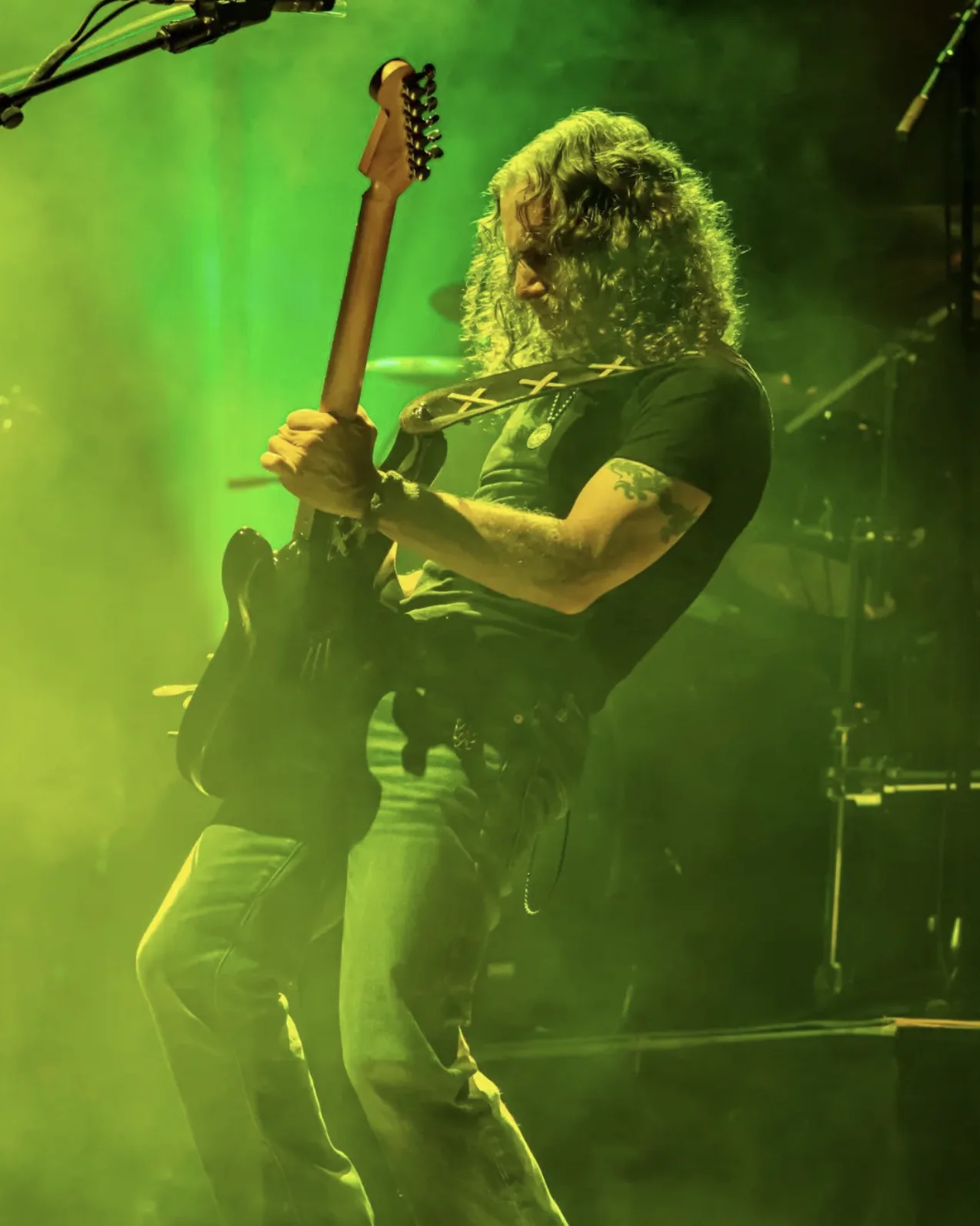 Ryan: Ha! Well, any of the four of them, really. But probably David simply because we’re both guitarists and could geek out talking about gear and tones and stuff.
Garde: Y’all’s set list is incredibly impressive given how broad and encompassing it is. You COULD do nothing but hits, and satisfy a lot of Pink Floyd fans, but you reach way beyond that. Talk about that approach.
Ryan: When we talk about the repertoire, we refer to “the Big Five,” you know, and those would be the albums “Meddle,” “Dark Side of the Moon,” “Animals,” “Wish You Were Here” and “The Wall.”
We play pretty much everything off those albums. People expect a lot of that material, and we enjoy doing it. But we still include a substantial amount of songs from “Atom Heart Mother”; the Syd Barrett years and “Piper and the Gates of Dawn” and “A Saucer Full of Secrets”; and then we cherry pick from the latter period, as well. “The Final Cut” and “Division Bell” and “The Endless River.” All of those albums beside the Big Five have their merits, as well. It’s crazy how much great stuff there is.
Garde: In addition to The Machine, you own your own recording studio, run a guitar school, write your own songs — AND you play in another tribute band called Beginnings, which performs the music of Chicago. Back when you started in The Machine and Beginnings, did you ever anticipate tribute acts would become a huge slice of the live music industry?
Ryan: To be honest, back in the early days, when that kind of thing was starting to crop up, I actually was kind of against it. Well, not against it so much, but I just didn’t take it seriously. Not long after that The Machine had started playing with a different lineup, but all the musicians then and now are from my hometown in New York state. And I knew and respected all of them. They’re great players.
When I heard that they were doing this, I thought, “All right, that’s interesting.” Then I heard good reviews and went to see them, and I got it. About the same time, other tribute bands started to show up on the scene. In the meantime, I’d been in music school getting a degree in composition.
And a few years after graduated, I got the opportunity to play with them. (Laughs) As a savvy working musician who wanted to keep working, I figured, “Why not?” And clearly it’s worked out really well. It’s hard to make a living in this business. I had no idea I’d be in the band this long, but I’ve been lucky and I genuinely enjoy it.
Garde: To what do you attribute the popularity of tribute bands?
Ryan: Like you were saying now, tribute bands have become a mainstay of live entertainment. In fact, it’s probably one of the strongest markets out there. I think the reason for that now is because the music tribute acts perform is some of the best there ever was. And it doesn’t seem to be being replaced by anything happening now, you know? So there’s an audience for it and, based on the younger people at our shows, I don’t see the popularity of tribute bands diminishing any time soon.
Garde: You’re virtuosic in a lot of guitar styles and when you started out, you probably had dreams of establishing your own career with your own music. That hasn’t happened yet. But I suspect there’s a very legitimate sense of artistic satisfaction and creativity involved in what you’re doing now. Would you agree with that?
Ryan: Absolutely, yeah. I mean, when you’re in the moment and you’re playing a Machine show, well, the other aspects of creative ambition sort of fall away in the magic of being onstage performing this incredible music. Everything is just about delivering a performance that’s inspired. We love the experience, and when it’s sounding great — and, again, the musicians I work with are incredible — it’s in most ways no different in a performative sense than if I was doing original pieces.
Of course, in the bigger picture, I’m painfully aware that I didn’t write the music we’re playing, and there’s a lot of other bands doing the same thing. There are online and ongoing chats about the philosophical or maybe existential kind of challenge that goes along with what we’re doing because, you know, it’s, you’re kind of a drop in the ocean and most of us do or did dream of playing original music.
There are so many people doing the same kinds of things — even something as, um, complex as Pink Floyd, you know? There’s a lot of Pink Floyd bands now. So it’s a viable outlet in a difficult business.
Garde: Yeah, but you’ve established yourselves over 25 years. And I don’t think fans should overlook the fact that there’s just four of you onstage — just like the original Pink Floyd concerts. It should be pointed out that a lot of tribute acts require several musicians onstage to pull off Pink Floyd.
Ryan (laughs): Well, yeah, I do think that sort of sets us apart in a certain way, and we HAVE been doing it a really long time. I think it’s fun and important that we try to keep it also a little more organic with just the four of us. I think there’s something a little special about what we do — and we’ve learned the audiences appreciate that, too.
Garde: In real-time, you’ve performed as The Machine to a succession of generations, meaning the Pink Floyd fan demographics is an ongoing thing not subject to “oldies” or “classic rock” generalization. Is that a fair assessment?
Ryan: Yeah, that says a lot about the catalog, for sure. I mean, Pink Floyd has transcended just being a rock band. It’s not an exaggeration to say Pink Floyd is an institution, you know. They’re a cultural phenomenon.
As good as Chicago was and is, and as much as I enjoy playing their music, it’s not the same thing. Chicago fans are largely older people who grew up with the band. If we see young people in the crowd, it’s mostly because Mom and Dad dragged them to the show. And they might enjoy it in the moment, but it’s not something that will probably stay with them. They’re not going to download a bunch of Chicago songs.
But in The Machine we see, night after night, proof that Pink Floyd’s music replenishes in a generational context. We get everybody — people in their 70s and 80s and we’ve got their kids and grandkids. And they all think of it as THEIR music because, musically and lyrically, the music is timeless.